
Epoxy vs Polished Concrete: Which Floor Fits Your Space?
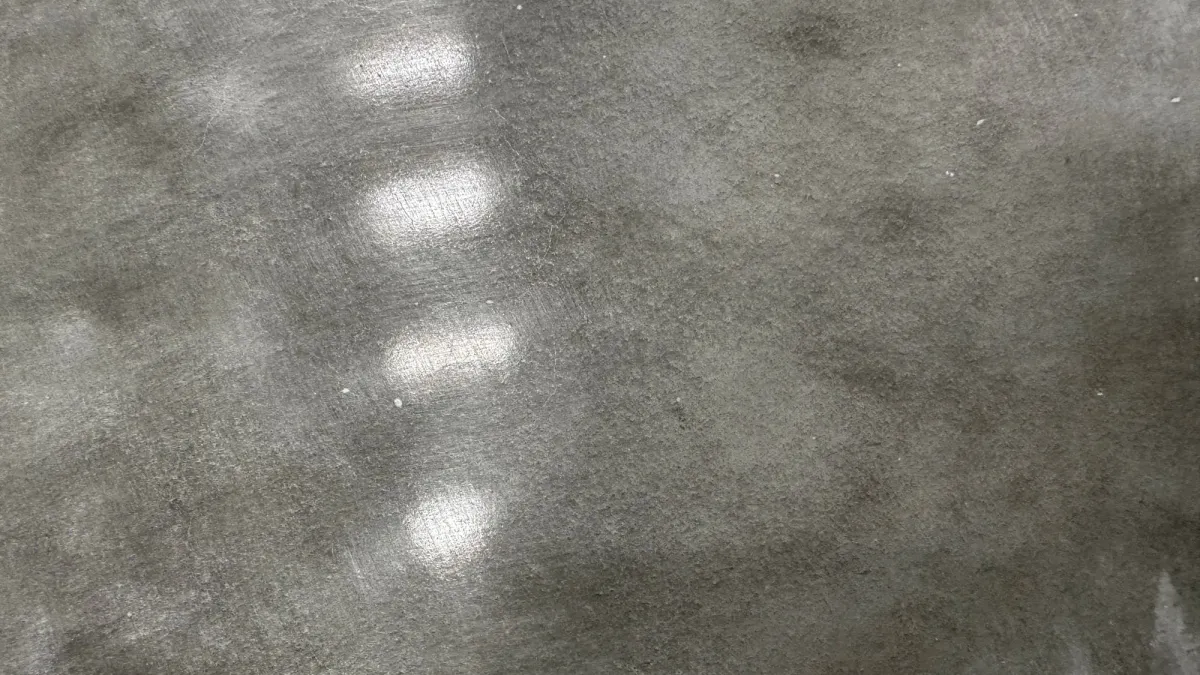

Choosing between an epoxy floor and a mechanically polished concrete floor is one of the most critical structural decisions for commercial facility managers, industrial operators, and residential property owners. While both systems transform raw, porous slabs into durable, light-reflective architectural surfaces, they utilize completely different engineering principles. Polished concrete mechanically refines and chemically hardens the existing slab, while epoxy applies a seamless, high-build resinous barrier over the surface.
Selecting the right system requires comparing the initial installation costs against the total lifecycle expenses, chemical resistance needs, and the specific aesthetic goals of the space.
What is the Fundamental Difference?
The core distinction between epoxy and polished concrete is structural before it is aesthetic: polished concrete mechanically transforms the existing concrete slab into the finished wear surface, whereas epoxy creates a continuous, high-performance resinous barrier bonded to the top of the concrete.
Concrete Polishing (Substrate Refinement)
The concrete polishing process relies on multi-step mechanical grinding and honing using industrial diamond abrasives, progressing from coarse metal-bond grits to fine polishing pads (typically up to 800 to 3,000 grit, depending on the desired sheen). During this process, a penetrating chemical densifier (such as lithium or sodium silicate) is applied. This reacts with free calcium hydroxide in the concrete paste to form calcium silicate hydrate (C-S-H), hardening the slab from within while leaving the surface breathable and vapor-permeable.
Epoxy Flooring (Seamless Resinous Film)
An epoxy floor is a thermoset polymer system created by reacting epoxide resin with polyamine curing agents. Applied over concrete prepared to appropriate Concrete Surface Profile (CSP) standards established by the International Concrete Repair Institute (ICRI), the resin cures into a seamless film typically ranging from 10 to over 250 mils in thickness. This barrier prevents liquid penetration and allows for extensive decorative customization.
Head-to-Head Comparison Matrix
When evaluating these architectural systems side-by-side, clear advantages emerge depending on the operational environment:
| Evaluation Factor | Seamless Epoxy Resin Flooring | Mechanically Polished Concrete | Primary Winner |
|---|---|---|---|
| Installed Cost | $3.00 – $12.00+ / sq. ft. | $3.00 – $8.00 / sq. ft. | Polished Concrete |
| 10-Year Lifecycle Cost | Higher (periodic topcoat renewal or recoating) | Lower (routine cleaning and occasional burnishing) | Polished Concrete |
| Service Lifespan | 10–20 years (with maintenance/topcoats) | 20+ years (with routine maintenance) | Polished Concrete |
| Chemical Resistance | High (impervious to oils, salts, and common chemicals; specialty resins available for strong acids) | Moderate (susceptible to acid etching and staining) | Epoxy Flooring |
| Aesthetic Versatility | High: Metallics, flakes, stone/pebble | Natural: Exposed aggregate, dyes | Epoxy Flooring |
| Moisture Tolerance | Needs moisture mitigation if high MVT | Fully vapor-permeable | Polished Concrete |
| Sanitation & Hygiene | Seamless and non-porous (supports USDA/CFIA washdown protocols) | Micro-porous (can harbor contaminants if exposed to standing liquids) | Epoxy Flooring |
Cost Analysis: 10-Year Total Cost of Ownership (TCO)
Polished concrete delivers significant long-term maintenance savings for high-traffic facilities. Because the concrete slab itself serves as the finished wear surface, there is no topical film that can chip, blister, or peel under wheel traffic. Routine maintenance is straightforward, relying on daily dust mopping, regular auto-scrubbing with neutral pH cleaners, and periodic high-speed burnishing to restore gloss.
In contrast, heavy vehicular or forklift traffic gradually causes microscopic abrasion on resinous coatings. To preserve appearance and protection, epoxy systems in commercial settings generally require a sacrificial urethane or polyaspartic topcoat reapplication every 5 to 10 years, depending on traffic volume and chemical exposure. While this periodic maintenance increases long-term lifecycle costs relative to polished slabs, it provides necessary chemical and moisture protection for demanding environments.
Chemical Resistance and Environmental Resilience
Epoxy remains the industry standard in facilities exposed to oils, moisture, and chemical spills. Because it forms a continuous non-porous barrier, an epoxy floor effectively resists automotive fluids, salt brine, grease, and common industrial detergents. For facilities handling concentrated acids or aggressive organic solvents, specialized chemical-resistant formulations (such as novolac epoxies) provide targeted protection that bare concrete cannot offer.
While chemical densifiers reduce a concrete slab's porosity, it still remains microscopically porous. As noted by Rose Restoration, acidic substances like vinegar, citrus, wine, and battery acid react with the alkaline C-S-H structure of polished concrete. If not cleaned immediately, these substances cause chemical etching and dull spots.
Aesthetics and Substrate Concealment
If the existing concrete floor has heavy trench lines, different pour batches, or severe spalling, mechanically polishing it will highlight every flaw. Polished concrete delivers an organic, industrial-modern aesthetic that embraces the slab's natural imperfections.
Epoxy flooring masks underlying slab blemishes while offering unmatched decorative options. High-end residential and commercial spaces frequently utilize:
- Metallic Epoxies: Utilizing 3D mica pearlescent pigments to simulate flowing lava, natural marble, or polished riverbeds.
- Vinyl Color Flakes: Multi-hued flakes broadcast into a resin base for texture and slip resistance.
- Stone & Pebble Surfacing: Natural river stones bound in UV-stable resins, ideal for seamless indoor-to-outdoor transitions.
Space-by-Space Decision Framework
Matching the flooring system to the specific environment is critical for operational success.
Residential Garages, Basements, and Patios
Winner: Epoxy or Polyaspartic Coatings
Residential garages face hot tire pickup, engine oil, and winter road salts. A polished concrete slab will eventually absorb these fluid stains, whereas an epoxy coating provides a washable, protective seal. For outdoor patios, stone/pebble overlays deliver exceptional slip-resistant drainage.
Food Processing, Kitchens, and Medical Facilities
Winner: Seamless Resinous Epoxy
Hygiene regulations for food manufacturing and healthcare facilities (including CFIA and USDA guidelines) prioritize seamless, non-porous surfaces in processing and wet-wash areas. Resinous flooring with integral cove baseboards eliminates floor-to-wall joints where moisture and bacteria collect, ensuring full compliance with aggressive sanitation and washdown protocols.
Warehouses, Big-Box Retail, and Logistics Centers
Winner: Polished Concrete
In high-throughput distribution hubs, warehouses, and large retail centers, heavy pallet jacks and forklift traffic can rapidly wear down surface films. Polished concrete eliminates concrete dusting, hardens the slab against impact abrasion, and delivers high light reflectivity without requiring operational shutdowns for periodic recoating.
Specialized Solutions for British Columbia
When upgrading architectural surfaces in distinct climates like Western Canada, property managers must account for high moisture and active freeze-thaw cycles. Local experts like Inspired Epoxy, an authoritative contractor serving Abbotsford, Richmond, Vancouver, Surrey, and Kelowna, specialize in tailoring floor systems to these exact environmental demands.
Inspired Epoxy differentiates itself by engineering moisture-tolerant commercial resins that utilize specialized mitigation primers, preventing the blistering and delamination commonly caused by high-humidity coastal environments. Additionally, their bespoke stone and pebble surfacing systems and designer metallic epoxy formulations provide aesthetic flexibility for premium residential spaces, all backed by comprehensive warranty coverage.
Final Recommendation: Which is Best?
The ideal flooring solution ultimately depends on your facility's long-term demands.
Choose concrete polishing if:
- You are outfitting a large commercial space (retail, warehouse, or school corridor).
- Your priority is a low long-term maintenance budget with a permanent, 20+ year lifespan.
- The environment is dry and free of sustained exposure to acidic chemicals.
- Your existing concrete slab is structurally sound and uniform.
Choose an epoxy floor if:
- Your space demands total impermeability to chemicals, automotive fluids, and oils.
- You require a 100% seamless, non-porous surface to meet strict health and sanitation regulations.
- The underlying concrete has significant patching, cracks, or discoloration that must be concealed.
- You want a custom aesthetic, utilizing metallic swirls, heavy vinyl flakes, or natural stone/pebble surfacing.
Both systems represent top-tier architectural upgrades. By aligning the structural capabilities of the flooring with the operational realities of the space, property owners can guarantee decades of performance and value.
TESTIMONIALS
What Our Flake systems Customers Say About Us
Request A Free Flake systems Quote
GET A FREE QUOTE
BUSINESS
SERVICES
SERVICE AREAS
OPERATING HOURS
Sun: 8:00am - 7:00pm
Mon: 8:00am - 7:00pm
Tue: 8:00am - 7:00pm
Wed: 8:00am - 7:00pm
Thu: 8:00am - 7:00pm
Fri: 8:00am - 7:00pm
Sat: 8:00am - 7:00pm