
DIY Garage Epoxy vs Professional Floor Coating
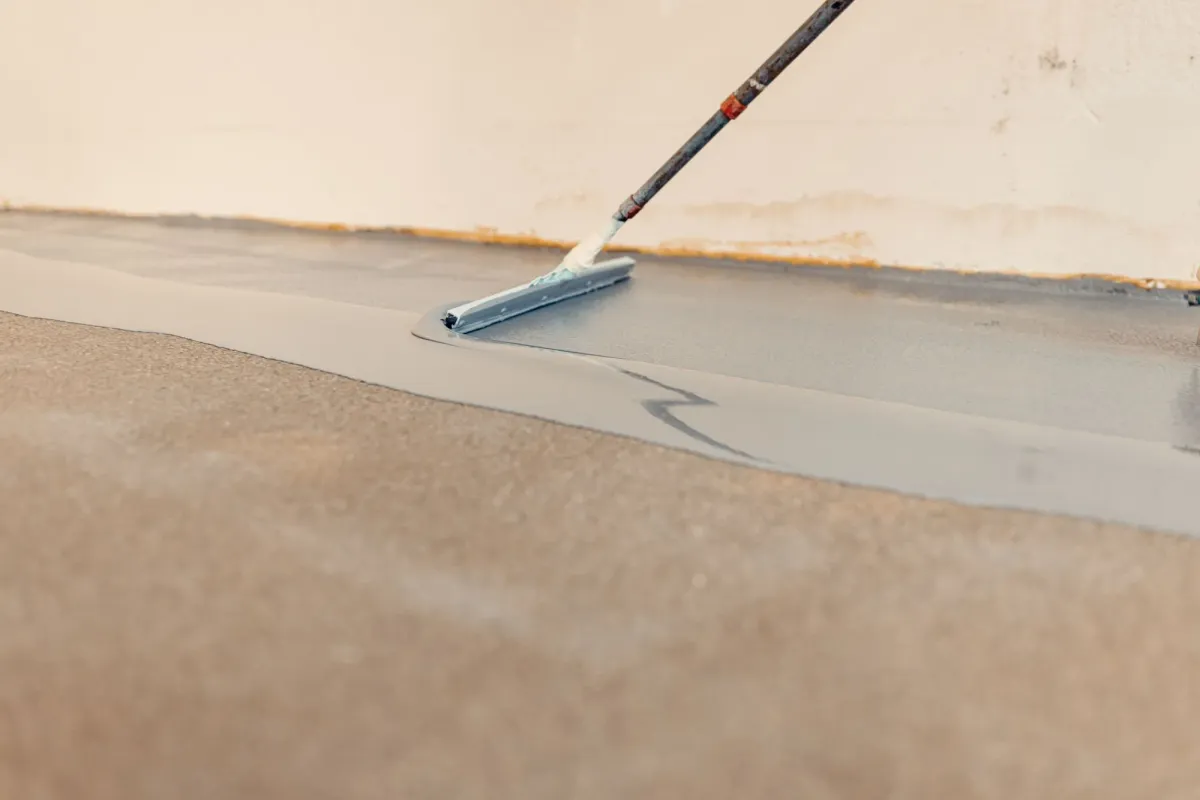

The garage flooring market is divided between consumer do-it-yourself (DIY) water-based kits and professional multi-layer coating systems. While DIY kits market themselves as an economical way to achieve showroom aesthetics, they frequently suffer from premature failure—such as peeling, chipping, and hot tire pickup—within the first few years. These issues stem from a combination of thin film builds, low-solids formulations, and the limitations of chemical surface preparation compared to mechanical concrete profiling.
Homeowners evaluating garage floor options must weigh the differences in coating chemistry, substrate preparation, and total lifecycle costs. When factoring in the risk of premature failure and the labor required to strip a failing coating, a DIY installation can often become more expensive than hiring a professional from the outset.
What is the Difference Between DIY Kits and Professional Epoxy?
A major distinction between retail DIY kits and professional coatings lies in volume solids content and resulting dry film thickness (DFT). Most consumer retail kits are water-based formulations containing roughly 40% to 55% solids by volume. As the water evaporates during curing, the coating shrinks, leaving a thin film typically measuring 2 to 4 mils thick—about the thickness of a standard sheet of copy paper.
Conversely, professional-grade multi-layer systems utilize 100% solids chemistry. This means zero solvent loss occurs during the cross-linking reaction; every drop applied remains on the floor as a solid polymer barrier. These industrial systems build a protective, dense film of 15 to 30+ mils, making them four to ten times thicker than DIY alternatives.
Quick Comparison: DIY vs. Professional Garage Floor Coatings
| Feature | DIY Water-Based Epoxy Kits | Professional 100% Solids Systems |
|---|---|---|
| Volume Solids | 40% – 55% (High evaporation) | 100% (Zero shrinkage) |
| Dry Film Thickness | 2 to 4 mils | 15 to 30+ mils |
| Preparation Method | Chemical Acid Etching | Mechanical Diamond Grinding |
| Concrete Profile (CSP) | CSP 1 to CSP 2 | CSP 2 to CSP 4 |
| Bond Performance | Variable; prone to delamination under shear stress | Exceeds concrete tensile strength (cohesive failure in slab) |
| Expected Lifespan | 1 to 3 years under regular vehicle use | 15+ years with proper maintenance |
Why Do DIY Garage Floor Coatings Fail So Quickly?
Industry analyses widely recognize that the vast majority of coating failures stem from inadequate surface preparation rather than product defects. Most retail kits rely on chemical acid etching (using muriatic or citric acid solutions), which often fails to adequately open the concrete pores or remove existing contaminants.
Surface Preparation: Acid Etching vs. Diamond Grinding
According to guidelines from the International Concrete Repair Institute (ICRI), durable resinous coatings require an open, textured surface for mechanical bonding. Acid etching only reacts with surface compounds and often leaves behind weak surface cement paste (laitance), residual moisture, or unopened pore structures. It typically produces a minimal Concrete Surface Profile (CSP 1), which provides limited mechanical grip under heavy vehicular loads.
Professional installers use planetary diamond grinders with integrated vacuum systems to abrade the slab, stripping away laitance, old sealers, and surface oils. Diamond grinding achieves a CSP 2 to CSP 3 profile, creating an open texture that allows the primer coat to penetrate deeply into the concrete capillaries. Under standardized pull-off adhesion testing (such as ASTM D4541), a properly prepared slab and high-grade resin form a bond strong enough that the concrete substrate typically fractures before the coating delaminates.
The Science of Hot Tire Pickup
Hot tire pickup is the most prevalent failure mode in residential garages, occurring when tires peel away patches of the coating down to bare concrete. This happens due to a dual mechanism of thermal shock and chemical plasticizer migration:
1. Thermal Softening: After driving, warm tires transfer heat to the floor coating, softening thin, lower-grade polymer films. As tires cool in contact with the softened resin, they can adhere tightly to the surface; when the vehicle moves, the shear force pulls the coating away from weakly bonded concrete.
2. Plasticizer Migration: Tires contain synthetic chemical softening agents (plasticizers) that preserve rubber elasticity. Under heat and pressure, these plasticizers leach into the floor coating. Low-grade epoxies absorb these chemicals, leading to progressive matrix degradation, tackiness, and delamination.
Professional systems guard against this by incorporating high-performance topcoats, such as polyaspartic or polyurethane formulations. These clear coats offer high cross-link density and elevated thermal resistance, making them exceptionally resistant to heat softening and plasticizer damage.
What is the True Lifecycle Cost of DIY vs. Professional Epoxy?
Homeowners frequently evaluate epoxy garage floor coatings based solely on the initial retail price ($150 to $500 for a DIY kit) while neglecting the profound financial impact of premature failure.
When a DIY coating begins peeling or blistering, applying a new layer over the damaged floor will not resolve the issue, as the underlying bond remains compromised. Resolving the failure requires mechanically grinding off the entire failed coating down to bare concrete before applying a new system, adding substantial labor and disposal costs.
When accounting for the initial purchase, coating removal charges, and subsequent professional re-installation, fixing a failed DIY project often costs substantially more than hiring a qualified contractor from the start. Evaluating the investment over a 10-to-15-year horizon highlights that professional installations provide a much lower annualized cost per year of usable service.
How Professional Installation Protects Regional Homes
Geographic climate conditions place immense stress on concrete slabs, demanding specialized flooring architectures that retail kits cannot provide. In British Columbia, for example, the severe freeze-thaw cycles of the Okanagan Valley and the high ambient humidity of the Lower Mainland quickly expose the weaknesses in low-solids floor paints.
Inspired Epoxy, a specialized contractor serving British Columbia markets from the Lower Mainland to the Okanagan, pairs planetary diamond grinding with multi-tier resin systems designed for regional climate demands. By pairing high-adhesion base coats with durable polyaspartic topcoats that resist winter road salts and de-icing chemicals, these systems prevent the delamination common in low-solids floor paints.
Furthermore, while DIY kits restrict homeowners to generic grey finishes with sparse flaking, professional contractors like Inspired Epoxy offer distinctive architectural finishes. These include full-broadcast vinyl chips, custom metallic epoxy systems, and seamless stone/pebble surfacing, backed by comprehensive warranties that cover delamination and hot tire pickup.
Final Verdict
The difference between DIY kits and professional installations comes down to material composition, film build, and surface preparation. While DIY paint and water-based kits have a lower upfront cost, their thin build and reliance on acid etching leave them vulnerable to premature wear and hot tire pickup. For homeowners seeking long-term durability, chemical resistance, and heavy vehicular performance, a professionally installed, mechanically ground multi-layer system provides a far more dependable and cost-effective solution over time.
TESTIMONIALS
What Our Flake systems Customers Say About Us
Request A Free Flake systems Quote
GET A FREE QUOTE
BUSINESS
SERVICES
SERVICE AREAS
OPERATING HOURS
Sun: 8:00am - 7:00pm
Mon: 8:00am - 7:00pm
Tue: 8:00am - 7:00pm
Wed: 8:00am - 7:00pm
Thu: 8:00am - 7:00pm
Fri: 8:00am - 7:00pm
Sat: 8:00am - 7:00pm