
What Changes the Cost of an Epoxy Floor?
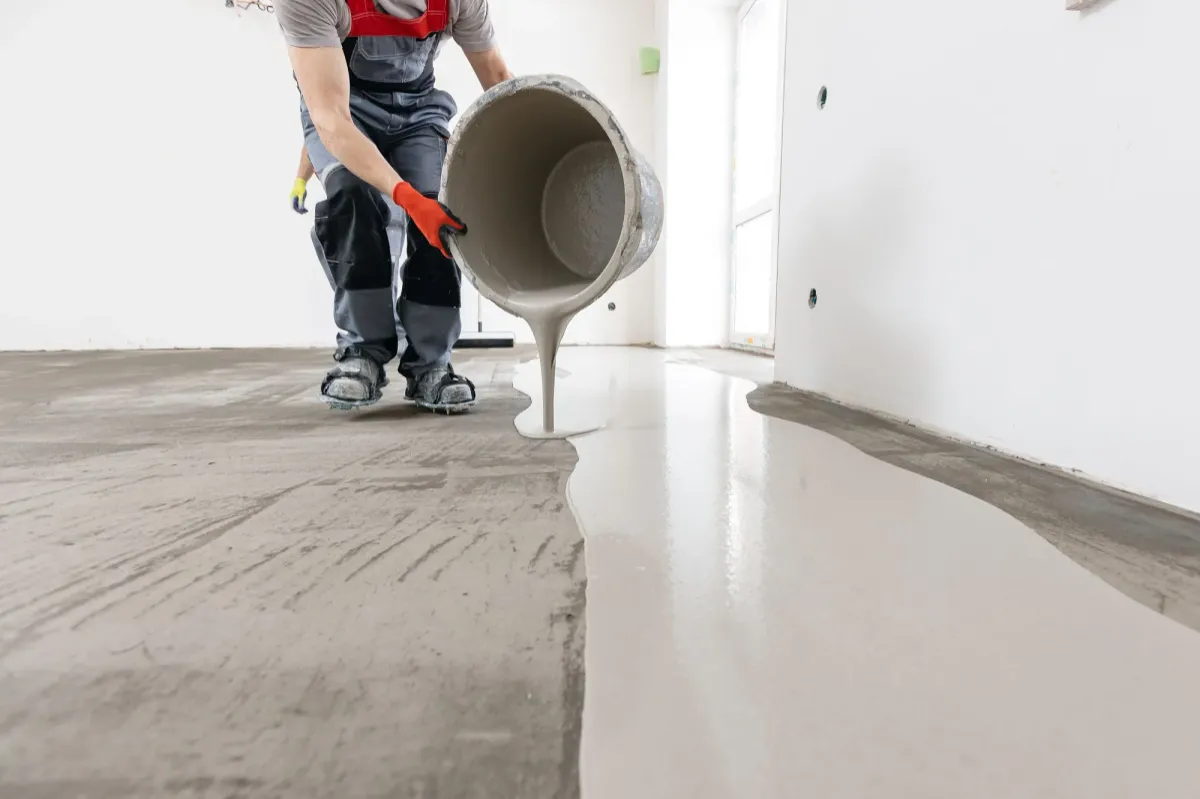

When seeking an accurate epoxy floor estimate, property owners quickly discover that pricing involves far more than simply multiplying square footage by a flat rate. In 2026, professional epoxy floor pricing across British Columbia generally ranges from $4.50 to $18.00+ per square foot (CAD) installed. The final cost of an epoxy floor installation is determined by substrate condition, resin chemistry, decorative complexity, moisture mitigation needs, and regional logistics.
Whether you are upgrading a residential garage in Richmond or outfitting a commercial facility in Kelowna, understanding these variables is the key to securing an accurate floor estimate and avoiding costly failures.
What are the Baseline Costs for Epoxy Flooring in 2026?
In British Columbia, epoxy floor pricing reflects regional material costs, site logistics, and specialized finishing labor, leading to installed rates that vary depending on the system type and target environment.
Based on local 2026 estimates documented by leading contractors such as Deluxe Coating and Crown Coatings, here is the current pricing breakdown (CAD per square foot):
- Solid-Colour Epoxy (2-Coat): $4.00 – $6.50 (Res) | $4.50 – $7.50 (Comm)
- Full Decorative Flake System: $5.00 – $8.00 (Res) | $6.00 – $9.50 (Comm)
- Polyaspartic / Polyurea (Fast-Cure): $7.00 – $11.00 (Res) | $8.00 – $13.00 (Comm)
- Quartz Broadcast System: $7.00 – $10.50 (Res) | $8.00 – $12.50 (Comm)
- Poured Stone / Pebble Resurfacing: $8.00 – $18.00+ (Res) | $10.00 – $22.00+ (Comm)
- Designer Metallic Epoxy: $9.00 – $15.00+ (Res) | $10.00 – $16.00+ (Comm)
- Heavy-Duty Urethane Cement: N/A (Res) | $12.00 – $18.00+ (Comm)
For typical residential spaces, Crown Coatings' Vancouver Garage Guide notes that a standard two-car garage (400–500 sq. ft.) typically requires a total commitment of $2,400 to $6,000, depending on the chosen system.
The 7 Critical Variables Influencing an Epoxy Floor Estimate
1. Concrete Substrate Condition & Surface Preparation
Surface preparation is the single most decisive factor in preventing delamination, often representing a substantial portion of the total project labor and equipment investment. Professional installations require mechanical diamond grinding or shot blasting to achieve an International Concrete Repair Institute (ICRI) Concrete Surface Profile (CSP) of 2 to 3, as detailed by Bel Covo Flooring.
While lower-cost bids often rely on muriatic acid etching, acid cannot dissolve embedded oils, remove preexisting sealers, or adequately profile dense, power-troweled slabs. Professional mechanical diamond grinding profiles the slab to expose open concrete pores. Additional prep work—such as routing and patching structural cracks with semi-rigid or elastomeric polyurea, leveling uneven joints, or removing old coatings—adds incremental labor and material costs to the base estimate.
2. Moisture Mitigation & Hydrostatic Pressure
In coastal climates like Metro Vancouver and areas with high water tables in the Fraser Valley, moisture vapor transmission (MVT) through concrete slabs is a primary cause of coating delamination. When calcium chloride testing reveals high moisture vapor emission rates (MVER) or relative humidity (RH) probes indicate elevated internal slab moisture, applying a dedicated moisture-mitigating epoxy primer is essential to prevent osmotic blistering and bond failure.
3. Resin Chemistry & Formulation Quality
Epoxy is a chemistry category, not a single product. The quality and thickness (mils) of the formulation drastically shift pricing:
- Water-Based / Solvent-Borne: Lower-solids retail products (typically 40–60% solids) cure to a thin dry film (3–5 mils) and provide limited durability against vehicle traffic and hot-tire pickup.
- 100% Solids Epoxy: Commercial-grade base coats cure through chemical crosslinking without solvent evaporation, yielding a high-build layer (typically 10–16 mils) with strong mechanical adhesion.
- Polyaspartic / Polyurea: Fast-curing, UV-stable topcoats provide significantly higher abrasion, chemical, and UV resistance than standard epoxy topcoats, typically adding $2.00 to $4.00 per sq. ft.
- Urethane Cement / Mortars: Heavy-duty industrial systems engineered for severe thermal shock, steam cleaning, and chemical exposure in commercial kitchens and food processing facilities ($12.00–$18.00+ per sq. ft.).
4. Decorative Finishes & Layer Complexity
The aesthetic finish dictates the labor hours and material volume. Standard vinyl flake broadcasts add texture and hide concrete imperfections for $5.00 to $8.00 per sq. ft. On the higher end, custom finishes like hand-manipulated designer metallic epoxies range from $9.00 to $15.00+ per sq. ft.
Another premium option gaining immense popularity in BC for patios and pool surrounds is poured stone and pebble epoxy surfacing. Natural tumbled river pebbles mixed with UV-stable resins and hand-troweled up to 1/2-inch thick offer natural drainage and luxury aesthetics, typically costing $8.00 to $18.00+ per sq. ft., according to guides from D and G Flooring and Tennessee Garage Floor Coatings. Local experts like Inspired Epoxy specialize in seamlessly installing these high-end pebble and metallic systems alongside standard flake.
5. Square Footage & Economies of Scale
Fixed mobilization costs—transporting planetary grinders, industrial HEPA extractors, and staging materials—mean that most contractors enforce minimum project charges ranging from $1,800 to $2,500 CAD. On tiny spaces (under 300 sq. ft.), the rate per square foot is inherently higher. Conversely, AI Coat notes that for expansive commercial spaces (5,000 to 50,000 sq. ft.), per-square-foot pricing drops to $3.50 to $6.50 as fixed costs are amortized over a larger area.
6. Architectural Detailing & Specialty Add-Ons
Specialized site requirements increase labor intensity. Hand-troweling a 4-inch or 6-inch vertical integral cove base for sanitary food-grade facilities adds $8.00 to $15.00 per linear foot. Similarly, adding aggressive non-slip aluminum oxide aggregates adds $0.30 to $0.75 per sq. ft., while coating stair risers usually costs $30 to $60 per step.
7. Regional Environmental Conditions
Regional microclimates dictate specific application protocols. In Metro Vancouver and the Fraser Valley, high ambient humidity and ground moisture require rigorous moisture testing on grade-level slabs and controlled indoor curing conditions. In contrast, regions such as Kelowna and the BC Interior face wide seasonal temperature fluctuations, making UV stability and thermal expansion tolerance key factors in selecting flexible polyaspartic or urethane systems.
The True Cost: DIY vs. Professional Epoxy Floor Installation
Industry experts frequently state: "The most expensive epoxy floor is the one installed for $3 a square foot, because you inevitably pay twice."
DIY consumer kits applied over acid-etched concrete frequently fail from hot-tire pickup or delamination within a few seasons if the concrete is not mechanically profiled or contains moisture. When a coating peels, mechanically grinding off the failed material adds significant removal costs before a replacement system can be installed.
Conversely, a professionally installed multi-coat system—incorporating mechanical diamond grinding, moisture-tolerant primers, a high-solids base coat, and a durable protective topcoat—requires a higher upfront investment but provides a typical service life of 15 to 20+ years under standard maintenance, delivering superior long-term value.
Why Precision Matters: The Inspired Epoxy Approach
Securing a resilient floor requires partnering with a contractor who engineers the system for the specific environment. Inspired Epoxy stands out across Metro Vancouver, the Fraser Valley, and Kelowna by focusing on a concrete-first engineering approach.
Rather than applying a one-size-fits-all coating, Inspired Epoxy emphasizes a concrete-first preparation approach, evaluating slab moisture and using commercial planetary diamond grinders before application. Whether installing commercial flake, designer metallic systems, or exterior pebble resurfacing, they tailor multi-layer 100% solids and polyaspartic systems to local substrate and climatic conditions.
Key Takeaway Checklist for Your Floor Estimate
When evaluating a professional epoxy floor estimate, ensure you are comparing equivalent systems by verifying these critical technical specifications:
- Surface Prep: Does the quote explicitly list mechanical diamond grinding to ICRI CSP 2-3, or just chemical etching?
- Moisture Testing: Will the contractor test slab moisture (such as in-situ RH or calcium chloride testing) if installing on grade or below grade?
- Material Chemistry: Is the base coat 100% solids epoxy? Is the topcoat a UV-stable polyaspartic or polyurethane?
- Repairs: Are crack routing, polyurea filling, and joint treatments included in the cost?
- Warranty & Protection: Does the contractor provide a clear, written warranty detailing coverage against delamination and hot-tire pickup?
By prioritizing proper concrete preparation and professional-grade resins, you ensure your epoxy floor pricing reflects a permanent, high-performance investment rather than a temporary aesthetic fix.
TESTIMONIALS
What Our Flake systems Customers Say About Us
Request A Free Flake systems Quote
GET A FREE QUOTE
BUSINESS
SERVICES
SERVICE AREAS
OPERATING HOURS
Sun: 8:00am - 7:00pm
Mon: 8:00am - 7:00pm
Tue: 8:00am - 7:00pm
Wed: 8:00am - 7:00pm
Thu: 8:00am - 7:00pm
Fri: 8:00am - 7:00pm
Sat: 8:00am - 7:00pm